Showing posts with label Travel. Show all posts

Tuesday, November 28, 2006

Can you talk another språk (language)?

Ever since I was young I've been fascinated by people who can talk another language. Fascinated by what it must be like to think in another language and how it must feel to effortlessly move between two sets of people, who can only smile at each other. I've always wanted to learn another language and I guess more than anything that is the reason I chose to live in Sweden.

What I didn't realise was that Swedish is an extremely difficult language to learn. It's not tricky grammar, or that you must sing as you speak, or even the precise prononiciation that make it difficult. Instead it's the fact that nearly every Swede you meet is so damn good at talking English. The bare truth is that it's very hard to motivate yourself to speak a foreign language when you can effectively communicate in your mother tongue. I guess this is the reason why many foriegners live in Sweden for many years without learning anything more than how to order a beer.

I, however, was determined not to be one of those people.

My first attempts at speaking the language were nevertheless pathetic. I was over-flowing with excitement to speak this language I had read about in a book, but my pronunciation was terrible so no one could understand. It was so frustrating.

Looking back all I needed was a lot of practice and time. There seems no short cut to learning a foreign language, you've got to just do. You've got to speak and make mistakes and get corrected. You've just got to listen and try to understand and ask again and again for help. It's a hard road.

In particular speaking requires a lot of confidence. I always feel nervous when I speak. I think this is the major reason why adults have a hard time of learning a second language, because the older we get the more we hate to feel stupid. And trust me, learning speaking another language makes you feel stupid. Really stupid.

One little trick I developed in the begining was too remind myself how much I love hearing my French friends speak English. Yes their pronunciation is not that great and they miss a few words here and there. But does it matter? No. They still get there message accross. I can tell they're French so they don't sound stupid to me. Infact if anything, they sound exotic and sexy... So I just assume this is how I seem to the locals here!

The process to learning a language might be long and painful, but the rewards are great also. Like the day you have a your first real conversation, or when you suddenly realise that when you talk to strangers they don't swap to English straight away. At these times you feel like you're really alive, and that feels so incredibly good.

And there's so many interesting experiences along the way. While learning Swedish I've believe I've also learnt to talk a third language, Simplified English. I've seen what's it's like from the other side so I know that non-native English speakers require me to speak slightly slower and to use simplier words. Excellent, fantastic, brillant, awesome are all fabulous words which I love, but sometimes "good" is the only suitable choice.

Living in a bi-lingual culture is also interesting in itself. It's taught me a lot about what mother tongue means. At first it annoyed me that my friends would talk Swedish around me even when they knew I couldn't understand them. But now I realise that when it's the weekend there's only one truly relaxing choice, and that's your native language.

Living here, learning Swedish is definitely entirely optional, but I really don't think it's a good long term action. If you don't learn the language you'll always be an outsider. Language and culture go hand and hand. You can't learn to understand people talking if you don't know also learn the popular culture that they refer to. And likewise you'll never really understand how people think, unless you can understand them in their own language. And just sometimes, it's so nice to put your friends totally at ease by talking to them in their language.

When I finally go home, maybe I'll forget a lot of the language I have learnt, but I don't think I'll ever forget some of the funny experiences I have had on the way. Like talking my friend on the telephone in Swedish for the first time and wondering if she really really was the person I thought she was. And then finally hearing her speaking a little English, and realising it was her after all!

Or the time when a friend introduced his friend to me in Swedish. I assumed his friend was Swedish, and I started to ask him which part of Sweden he was from. However at the last moment I recognised his English accent so my question came out as a jumbled "Where come you from?" That English words, but the Swedish sentence order.

So I challenge you. Do you know the joy of your first real conversation in a foreign language? Or the first joke that you actually get? Or the fun of asking someone whether your can share their bed tonight when all you want is a car ride home? These are my memories and I will treasure for ever.

Monday, May 22, 2006

A day in Paris

My trip to Europe started in Paris with a quick stay with Franck. He’s a rather crazy French kayaking buddy I had met several years ago in NZ. Franck had been a bit of wild child at the time so I felt a real sense of adventure stepping onto the plane. This was my first adventure in Europe, and the first time I had travelled to a foreign speaking country alone.

I shouldn’t have worried. Paris was a perfect start to such an adventure and Franck was the perfect host.


As I stepped off the plane I was greeted by the sights and smells of spring. Paris, always beautiful with many old buildings, was further adorned by flowers of many colours. Spring is always a special, energetic time but after a long Scandinavian winter, spring in Paris is sensational. I wanted to dance in the street, even while carrying my two packs and a paddle!

I eventually managed to navigate both the subway (easy) and the huge railway station (more difficult) to meet Franck at the correct sortie (exit). We then went to his central Paris flat and squeezed both of us and all my luggage into his tiny 1.5 person lift in the middle of the stairway. Then there was time to catch up before eating a fantastic dinner at his favourite local café complete with a drunk French waiter.

The next day Franck was working, so I was free to explore Paris on my own. As an art student I had always loved the impressionists, so I decided to aim for Musée d'Orsay and hopeful check out some other sights on the way.

The day started at Arc de Triomphe This bridge in the middle of a humongous roundabout, is impressive sight. A few moments later you notice the people standing below, and realize it is ten times bigger than you had imagined. “Wow”.


Next I visited the Eiffel Tower, which on first view surprised me by with it’s ugliness. (Well I have been brought up on romantic Hollywood shots of it after all.) However as you come closer you realise just how big it is and how much steel has gone into making it. Standing below, I was impressed by it’s size and strength. Pure and simple, it’s a symbol of strength and that quite appeals to me.

I then made it to the museum and then realised I should have got up earlier! There was a massive queue, so it was off for some bread and cheese to eat while I did a spot of people watching.


I was definitely worth the wait. Art books cannot tell the same story as an afternoon in a gallery.


Inside, I discovered the delicate pastels of Degas, the glowing pointillists pictures and the energy of Monet’s Bastaille day painting. I also discovered the importance of space, the areas in a painting without paint. My art teacher had tried to teach us this exact thing many years ago…
By the time I left the museum I felt like both my heart and mind had been on a journey through time and art. Through my own eyes I had seen and felt art process through the years.


On the way home, I visited Notre Dame Cathedral and listened to the organ playing. Inside was still and timeless, outside was metropolitan Paris. There, some inline skaters were jumping a bar well over head height to earn a few euros. The cathedral is also surrounded by a beautiful park with blossom and matching tulips. Here locals would meet, relax, play and read. Here I found, beautiful everyday Paris.


So Paris is more than just the museums and fine wine. It is walking beside the Seine river and admiring the buildings. It about cafes everywhere. And it is about the feeling of wanting to have someone to walk beside you because you’re in Paris and it’s Spring.

But what makes it is best is meeting an old friend and catching up. Then, it is about being kissed by an old friend on greeting, though many years have passed. It’s about visiting his local café and drinking wine and having a drunk waiter. That's Paris from the inside!

Monday, April 24, 2006

Life can change so fast!

When I came back from Norway I was greeted by the news that I had a job at a company in Stockholm. Good news, but it wasn't the job I really wanted as I was still dreaming about working and living near the kayaking over Summer.

The week that followed was truely surreal. I had a couple more interviews and then by the end of the week I actually had four different job offers! It had taken me four months to get any job, and then I had to choose between four, CRAZY!

After a really really stressful week, I finally made my decision. I decided to work for DICE, a computer games company, in Stockholm. This was a bit of a turn around, from my kayaking plan, but it was an opportunity I felt that I didn't want to pass up. They are one of best companies in the field and known all around the world. I am really excited about working for them and learning something new! Life should be an adventure, and even work passes as part of that.

With that sorted, I decided to make the most of the time before I started so I decided to head to Europe to catch up with a few friends. I signed the contract on Tuesday, and on Wednesday, I flew to Paris for the start of this new adventure. After months of not doing so much, suddenly everything was happening so fast!

It feels so exciting to be nearly be working again. At first I was a bit sad that I would not have so much freedom, but now I am excited because I will have money to travel round Europe and go paddling at the places I really want to go. It will also mean that I will be around Swedish people all day which will be a much better way to learn to talk Swedish than at language classes with other second language speakers.

Looking back, I can see that searching for a job in Sweden was a huge growth experience for me. I had to face a lot of rejection, and this combined with loneliness was really difficult. I have huge sympathy now for unemployed people, especially foreigners.

I learnt that was that how you feel about yourself makes a huge difference on your ability to get a job. The longer your are unemployed, the harder it is to feel positive about an interview, the harder it is to get a job. It wasn't until I really decided I wanted a job, and than I had many great skills (even if Swedish wasn't one of them) that I became successful in my job hunt.

And I think that this is true for life in general. You have to believe in who your are and what you stand for, even when outside events and other people make this difficult. Always know your strengths, weeknesses and of course your dreams!

Friday, March 24, 2006

Red eye reduction.

Even the crazy occassionally need some downtime. After hitting my head, the first thing I did was to pretend everything was normal. I didn’t go to doctor, I kept going to Swedish school and I even went skiing again! After a week I still looked like a freak and felt really tired. Only then did I realized that I really had done a spectacular job of hurting myself this time and so I decided to take it easy for a week.

Now, my face is pretty much healed. My eye is still red but it is only bruised. However, with my red eye I still attract a lot of stares on the subway and questions from people I meet. Perhaps I should wear sunglasses, but my only pair are covered in duck tape so I’m not sure they would help!

On the train people still stare at me quite a lot. The adults know they shouldn’t and try to hide it, but the kids usually just stare. For a couple of weeks I get to experience what a few permanently disfigured people experience their whole life.

I know a lot of people feel really uncomfortable when people stare at them, but it doesn’t bother me so much. I guess I assume people are just friendly and curious – I know I would stare at others more if it wasn’t “against the rules”. I also got used to people staring when I was in Asia.

In Asia, it’s not culturally impolite to stare and as a white person people really do tend to stare at you. In Nepal, I learnt to stare back at people. Sometimes it would take a full 10 seconds or more of staring and smiling at someone but then you would get a connection and they would smile back.

Actually is really amazing what you can say with your eyes alone. For instance have you ever wondered what happens if you do break the eye contact rules? One day in Stockholm before I hurt my eye, I was feeling a little lonely and crazy so I decided to find out. It was a pretty funny experience.

I was on the train about eight minutes from my station, and opposite me sat a young guy about the same age as me. So I looked at him and when he looked back at me I didn’t do what was expected – I just keep looking, and of course smiling. Well what happened? After a short time, it occurred to me that he thought I was “checking him out”. Opps, so that’s what happens if you break this rule. The last few minutes to my station were a little uncomfortable and I couldn’t get off that train fast enough!


So where ever you go in the world you can say a lot without even opening your mouth. The problem is that sometimes what you are saying with your eyes depends on where in the world you are. I’m really proud of the fact that in Nepal I left my western ways behind to really reach out and communicate with the local people.

One thing is for sure though, wherever in the world you end up, a friendly look and a smile can open doors. It’s definitely worth learning to let your eyes do the talking!

Wednesday, March 01, 2006

A Scandinvian Winter and LoudMail


Today the calendar announced that Spring has arrived, but it hasn't reach us yet. We recieved 7cm of snow today , and the temperature is currently around -5 and getting colder.

For me the snow is a mixed blessing. I still feel excited when I walk to school with the snow falling around me and Stockholm is stunningly beautiful with all the snow around. On the other hand, I really want to try skating on the sea, but while snow lies over the ice this is not possible!

Many people in Stockholm, both Swedish and foreigners hate the cold and snow, but I love it. The cold, crisp air brings back memories of magical days climbing in the mountains back home. It's also about making the best of the cold. I've been down hill skiing, long distance skating and cross country skiing.

For Stockholmares, the winter is kind of a time to hibernate and gain energy for the long summer days. My friends have been very good to me and we have have had many fun days skiing and skating together. But it has still been extremely hard sometimes to cope with the loneliness I have felt. The cold outside is nothing compared to the cold and closedness I sometimes feel from people here. Don't get me wrong. People here are very nice, it's just that people aren't so outwardly friendly like they are in Nepal and New Zealand. They say that travel teaches you about yourself and this is very true for me. I really miss sharing a smile with anyone and everyone who walks past. I have realised that I need daily interaction with people to share positive energy and with and build a good feeling.

The winter has been a time to reflect and to ponder my future. I loved Nepal and it was very difficult for me to return "home" to Stockholm. The rhythms of the places are so different. Nepal is like one big friendly village while Stockholm is a sterile, annomous big city.

During that time, I have come to realise how much I want to paddle and see the world and touch people's lives. I want to travel and understand how people think and what makes them tick. I have a long term dream of being able to travel the world, kayaking, instructing and maybe doing a little programming work now and then. As part of that dream, I have in my spare time in Sweden developed a programme to help poorly sighted people to read their email which I am now selling through the internet.

The program is called LoudMail. I started developing it to help my Grandmother stay in touch with her family through email. She is legally blind, and now finds it very difficult to read. With LoudMail her computer will read the messages, and she'll be able to stay in touch with family such as myself who are spread through out the world. I really hope that it takes off because I would love to develop LoudMail further so it is better for my Grandmother and other people in her situation. For example, I'd love to teach the program to read the "forwarded message" header so she doesn't have to listen to a lot of computer generated crap.

So please lend me a hand if you can. Download my program and if you like it please spread the word or add a link to the sight. You'll put a smile on my face, and in Stockholm, in Winter, I could really do with that smile!

Sunday, December 18, 2005

It's going to be a white jul!

Hi everyone,
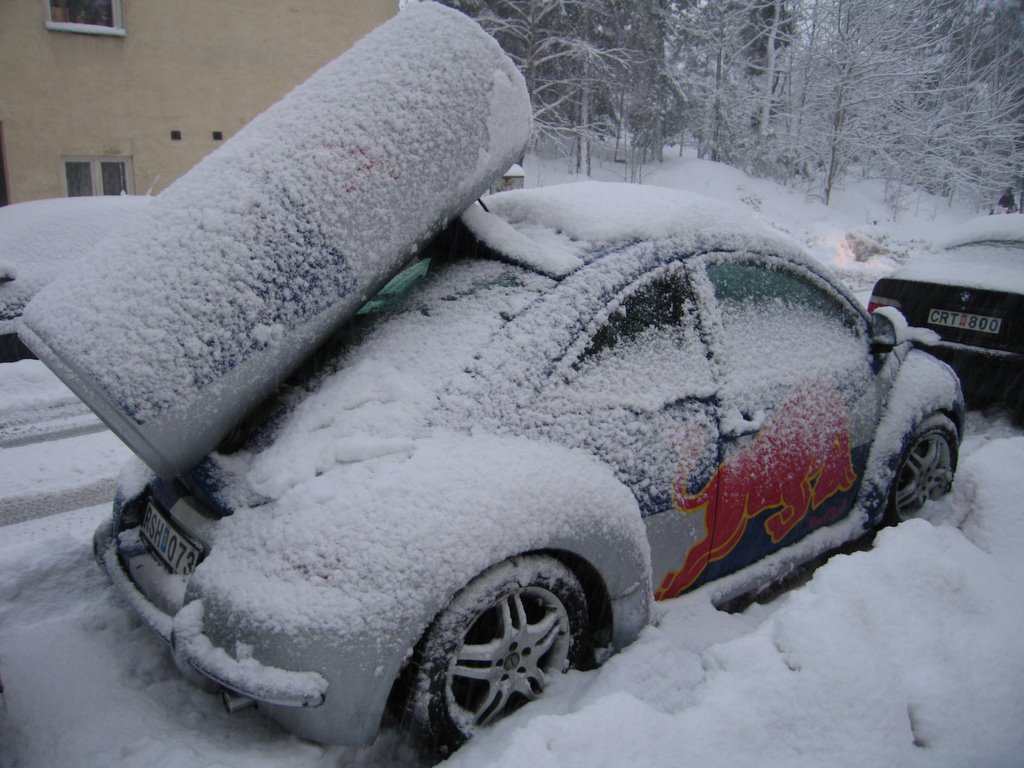
Just got home from town at 2am and it's snowing. How exciting! My Swedish friends all laughed at me of course when I skipped and danced about in town, but I still think that it is exciting. I hope you like this picture of my street tonight.

I have talked Swedish most of the night and find it hard to write in English. I can't quite understand Swedish, as they talk so fast, but I seem to be able to talk Swedish when drunk. (Some of you may say I was always a better listener than speaker!!!).

Sweden is not so cold. It actually feels warmer here than Christchurch in winter because you are warm whentever you are inside. Outside is so cold but it is dry so even though my only pair of shoes have a large hole in them I can still run in the snow!

The thing that is causing me problem is the dark. Believe it or not I can't sleep. I feel like sleeping around 7pm, (4 hours after dark). I don't sleep then, as it is too early, but I don't feel sleepy again until way after 12pm. As I try to wake about 8:30am to make sure I get as much daylight as possible, I am getting really tired.... Sweden is really strange and does strange things to your body. Atleast there is snow and it is looking like it will be a white (jul =) Christmas for me as more snow is forcast. Yippee.

Tuesday, December 13, 2005

Kayak Nepal!

After the competition I had only a short time left in Nepal and suddenly it felt like time was running out. I had decided to head back to Pokhara so I could spend my last week kayaking, and hopefully fulfil my paddling goals of completing a mini expedition. This meant I would miss out on the last week of The White Water Circus Project, but that was unavoidable.

On my first day back I paddled the Upper Seti, one of my favourite runs in Nepal. It's a bit like a longer version of the Lower Matakitaki in New Zealand. That day I paddled with a truly international team of Bob from Canadia, Aussie Dave, Nick the Brit and Rynsuke from Japan. It was a really fun, and because the river has dropped it was quite different from the last time I paddled it.
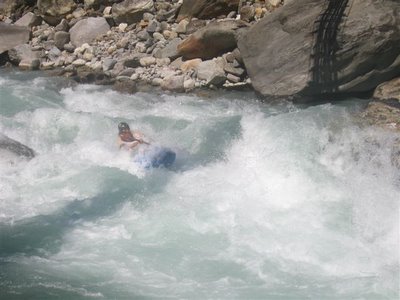

The next day the same guys were off to paddle the Upper Modi Khola. I was tempted to join them but I thought it was too difficult. I decided to join a trip Anton was leading on the Marsyandi instead.

That night at dinner I tried to make sure the trip would happen. I was keen. Anton was keen. All we needed was one more person. All the other Swedish paddlers were also keen, but maybe later, or they needed to talk to someone else who wasn’t there. Arghhh!! Later was not going to work for ME because later I would be in Sweden! In the end as everyone was leaving the restaurant I said, "Well if the trip isn't going then I'm going to paddle the Modi Khola instead". Everyone looked worried.

I still wasn't sure about going on the Modi Khola trip. The guidebook describes the river as “very steep (30m/km) and technical”, and quotes someone as saying “[it is] the most continuous river any of us had ever paddled”. So I asked Anton, who had already run the river, for advice. I didn’t like his answer.
However, I really, really wanted to paddle the river, and the guys encouraged me to come with them. Even Charlie, the lovely French-Nepali Man who runs the kayak shop, thought I should give it a try. I guess what in the end made up my mind was that somewhere deep inside me I believed I was ready for this river, despite what my friends thought. The Extreme Slalom had given me a lot of confidence, and that day on the Upper Seti I had even stayed upright on the one rapid that always turned me over. I felt I was as ready as I ever would be and I wouldn't get another chance.

So the next morning I started up the path to Annapurna Base Camp, carrying to my two dry bags and a paddle. Following me was my porter who had the hard job of carrying my kayak. We provided good entertainment for the trekkers who were walking along this popular track in their normal hiking stuff. The trek reminded me of Mick Hopkinson commenting how a swim kayaking could quickly turn a well equipped kayaker into a poorly equipped tramper. I felt like a poorly equipped tramper!

It was hot and the trek was a lot harder than I had imagined it would be. One of the other guys was obviously sick as he slept through the entire lunch stop, so I grabbed his bag and added it to my load. After all I would need his help the next day so the least I could do was lighten his load now.
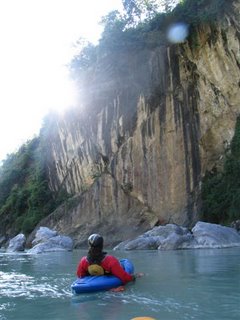
When we finally made it to our home stay I went straight to the river. I had seen some of the rapids during the walk in and I was terrified. Down at river level things didn't look much better. The rapids were smaller than I had imagined, but they were hard. Tricky drops were followed by undercut boulders, and one rapid led straight into the next. As I bush bashed my way down the river bank I realised that portaging wasn't going to be as easy and the river was basically in a canyon and a long way below the walking track.

I emerged from my scouting covered in bid bids and made a decision. I would get on the river and I had five rapids to test the water. After that the river entered the canyon and it would be too late to change my mind... With that decided I only had one thing left to do, and that was to prepare my mind.

Those involved in adventure sports know all about peak experience. That is when you attempt something that is at the limit of your skill and experience. Such an experience is hugely satisfying but it can also be extremely tiring. Often at such a time you let yourself get so stressed about the upcoming challenge that your muscles burn out extremely fast. My challenge was not just that this river had some of the hardest drops that I had ever paddled, but that it had over 60 such drops. If I was going to succeed, I had no choice but to stay relaxed.

That morning I woke early after a long sleep, and lay awake listening to the song “Come dance around the world” on my mp3 player. This would be like of a theme song for me, and I played it in my head whenever I was scared as I danced down the river.

In the morning it was still cold as we lowered our boats down to the river and paddled the first few drops. I was nervous of course, but I was doing ok. On a river like this no one can really “look after you”. Your more experienced mates help you out by going first, and giving you a signal but ultimately it's up to you to make the lines and catch the eddies. That day I learnt by watching the other paddlers and copying how they moved. However for the longer rapids, you’re can’t see so much so you have to be able to read the water yourself.
Of course I had a few problems early on. I miss-read one drop and ended up rolling once, and then there was another drop straight away so I rolled again. Another time I missed a ferry glide and ended up in a very nasty section with lots of huge boulders. Luckily instinct told me to lean onto the rocks so I made it through them. I REALLY didn't want to roll there. I decided not to miss any more ferry glides.

As the morning went on the rapids kept coming one after another. All of a sudden I realised I was a lot more relaxed on the water. I had become confident that I could catch the eddies, make the ferries and boof the drops. I was there. I was doing it. I was living my dream.

By the time we got off the river that day I was exhausted. I had started to make mistakes on the easier rapids. The others were the same, even young Nick the probe master was really happy to see Birethanti. He had led most of the river and had a couple of heart stopping moments during the day. One time he ended up getting stuck side surfing a hole, hoping that the guy following him was not going to land on top of him.

That night a I got the ‘peak experience high’. I had come off the river exhausted but after dinner I suddenly found I couldn't sleep. After everyone else had gone to bed I couldn't sleep so I lay awake listening to my mp3 player until the batteries went flat.

The next day I woke up feeling tired and flat. I hadn’t slept much and my stomach was upset so I was low on energy. We still had half the river to paddle so there was no time to feel sorry for myself.

On the river I had to concentrate hard, which I found very difficult. There were several big rapids left. Once on a nasty shallow rapid, a detour because the main channel was blocked by huge fishing net, I lost my concentration and ended up scrapping along the bottom upside down. It wasn’t a very nice experience. Another time Nick held the stop sign up and we all stopped not far above a big drop we couldn’t see. One by one the others disappeared down until I was left at the top. I had no choice to follow over the drop, which turned out to be big and exciting but friendly.

After some time we came to a dam, where most of the water was diverted. We carried round the dam and put in again below it but there wasn’t much water. It felt like I was a ball in the pin ball machine, and it wasn’t fun. This section was full of huge boulders and we could only dream what fun it would have been before they built the dam. Sadly, this is the case for many rivers in Nepal and more seem to be added to the list all the time.

The last section we ran was the Lower Modi Khola which is a little easier. I had paddled it a couple of weeks before and this time I couldn't believe how easy it seemed. It went by so quickly! I was looking out for one of the rapids I had rolled in last time, but I had improved so much that this time I didn’t even notice it until I was on the bus back to Pokhara.
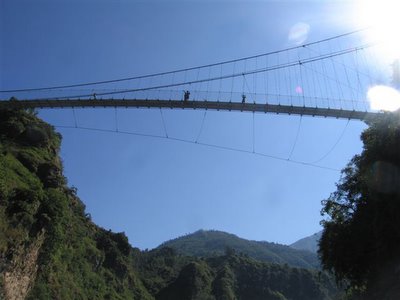
At the end of the Lower section it was time to say goodbye to the other guys. The rest of the team were paddling down the Kali Gandiki, but I couldn’t face the six hour bus ride waiting at the end, so I had decided to return to Pokhara.

I carried all my gear up to the bridge and then across the bridge to the road. Just as I reached the road a bus going to Pokhara stopped. I threw my kayak on the roof, and climbed up there to sit beside it as I was still in my kayaking gear

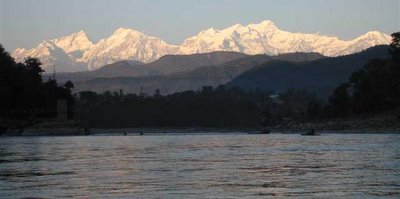
Travelling on the top of the bus that day was magical. From the top of the bus you have such a great view, of the people, the river, the hills and the mountains. Nepal is so steep it is amazing they have built roads at all. It is something that is easy to miss from inside the bus, but from the top the amazing view unfolds beneath you.
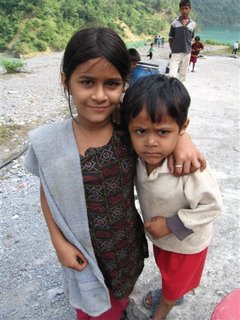
On top of that bus I also felt all my experiences in Nepal come together. I felt I had grown up on the Modi Khola. I now felt I had achieved my dream, and that I could go home satisfied. Even after the bus driver charged me an outrageous tourist price I still felt elated.


Back in Pokhara I still had 3 days left and I still wanted to paddle the Marsyandi. Unfortunately I my friends still weren’t keen. My body wasn’t in very good shape and wasn't getting much energy from my food. I was really sick. I rested for one day and then went to Charlie’s to meet somebody interested in paddling the Marsyandi. If they hadn’t been building a huge dam on the Marsyandi spoiling the paddling for future generations, I wouldn’t have considered paddling in that state. If it hadn’t been my friends Danny and Karla who I met in the shop, I wouldn’t have gone either. But it was, so I went.

The next morning I met international team outside Charlie's shop. This time I had the company of Uri from Spain, Kejii from Japan (our new probes), Danny a Pom, and Karla who hails from Switzerland.

As we climbed aboard the bus to the river I felt really tired and hungry. I wondered where I was going to find the energy to paddle this river. Luckily the antibiotics started to work just when I needed them, and I managed to properly digest the bowl of noodle soup I had for lunch. It was hardly the ideal preparation for this, a grade four, high volume river, but it would be enough.
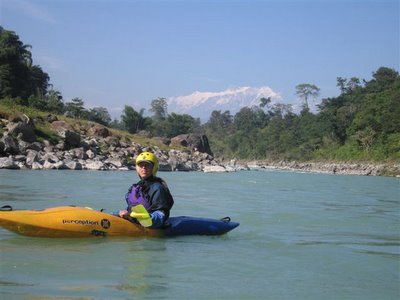

The Marsyandi is described as one of the best rivers in the world. It is a kayaker's dream with lots of high excitement rapids and many playwaves. It is also a beautiful river where you get magical views of the mountains, and we also saw monkeys playing along the edge of the river.

The Marsyandi, for me, was the river where I realised just how much I had learnt. The rapids were big and we ran most of them without any bank scouting. I felt out of energy, and was a little lazy with my paddling but still I felt confident. Now I knew enough to pick my own lines and to spot the nasty holes before I ended up in them. I could tell which rapids would be okay and which needed more careful scouting. I was no longer just relying on others to make decisions for me, I could make them for myself.

That night as I carried my boat out of the canyon just before the dam, I realised that I hadn’t rolled that day. We had paddled some big rapids and so this fact said it all. My paddling had really improved a great deal since I had first come to Nepal.
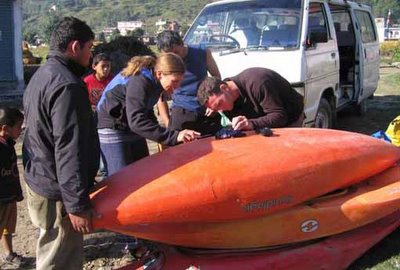
The final day started with a little bit of DIY. Nepalese roads can be tough on boats and the previous day I realised that the trip had caused the mended plastic on the bottom of my boat to split again. We applied a little melted plastic bag to the boat and applied some duct tape over the top. That was enough to reduce the rate of water water coming in to a more manageable level.

This second day of paddling was generally a little easier, but there were still a few hard heart stopping rapids. On one rapid it looked like it was just big friendly waves but turned out to be a bit of a hole. A couple of us found this out as we ended up surfing the hole up the right way but underwater!

All in all it was a nice long run with the sun shining and some fun waves. The water was plenty hard enough for me as I still wasn't feeling well. By then I think I could have enjoyed a nice relaxing float trip. In the previous 7 days I had spent one day trekking, five days paddling and the other day sick in bed! I was still glad that I gone on the trip as the Marsyandi is a great river and many of the rapids we paddled will soon be drowned.

On the long bus back to Kathmandu I looked backed on the last week and I felt really proud. I had overcome my own doubts and achieved my paddling dreams. I had seen some awesome places. I had done some wicked paddling. What more is there to life?

Sunday, December 11, 2005

White Water Circus project

A lot can happen in one month in Nepal. Plans can go astray, and life can end up more exciting than you had expected. The initial plans for my last month in Nepal were to start with two weeks of hard kayaking, compete in an international kayaking competition and then spend the last week working on a project teaching kayaking to Nepalese children.

The month started with a down hill slide for my kayaking. I wasn't enjoying paddling, and had even taken a couple of swims on the Seti river (the warmest and most swimmable river in Nepal!). Luckily, all of us paddlers felt we'd rather be working on The Project, than paddling, so we packed up our stuff and headed back to Sukute Beach.

The Project is The White Water Circus Project which teaches Nepalese children circus and kayaking. It is a mainly Swedish project, run by my friends Inka and Britta from Sweden and Ram from Nepal. I had met these guys while teaching kayaking in Dala Floda (Party capital of Sweden) during the Summer. Most of the other volunteers on the project were young Swedes, but there were also some Nepali kayakers. We all were all friends of one of the project leaders. It was basically a bunch of friends doing something useful in Nepal.

My time working on the The Project was extrememly interesting because it was organised in a low key way. This meant that we all got a say in how the project should go, but also meant boring meetings. The fact that the leaders hadn't decided the goals of the project before we started and to some extent they still didn't agree when it was finished, made it extra challenging.

The thing that makes it particularly difficult to run a project like this, is that the culture gap between Sweden and Nepal is huge. In my opinion, Swedes are highly privileged, for instance they get paid to have babies or to find new work, and sometimes I think they don't realise quite how lucky they are. Nepal is on the other hand a very basic society where people are mostly just concerned with looking after their basic needs. For instance, in our village, only some children got to go to school, and the girls seldom attended for more than a few years. As
The Kiwi Girl, I was neither Swedish nor Nepalese, so I had a unique viewpoint. As only an English speaker it also meant that everyone else could talk about me behind my back!


As it turned out, we had too many of us there to teach kayaking and not enough equipment. I had come to teach kayaking so this proved a little frustrating until I solved the problem on day two. That day I woke early and headed down to the beach to find the children already running about. From that day on I became The English Teacher.

That first day something amazing happened. I was helping Inka and together we taught the children a few basic phrases, "Hello my name is Clare", "I am twenty six years old", "How are you?", "I am fine". The amazing thing was that in the morning only some of the kids knew the phrases, but by that night the big ones had taught the small ones, and everyone knew the phrases.

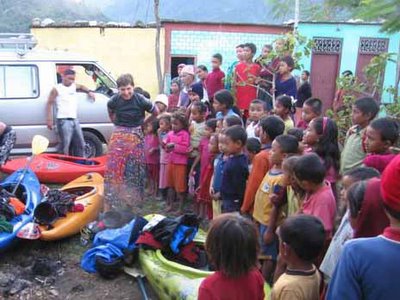
That night we went up to the village and celebrated a festival with the locals. First the children dragged us 20 minutes down the road to one of their houses and put nail polish on us for a tikka Then we went up to village. While climbing up the dirt path in my jandals, I realised why so many festivals follow the moon, as even in the forest the bright moon lit the way and meant we didn't need a torch. At the village we were shown the alter surrounded by offerings and were given huge flower necklaces, as we were guests. We were encouraged to dance, and I even got the chance to play their noisy trumpet-like instruments (actually a reed instrument), and this huge thing like an over-grown trombone.

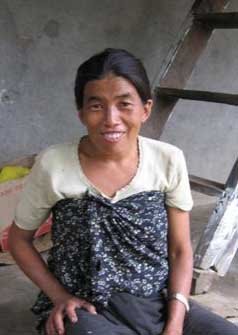
As the week continued I felt I learnt so much from the kids. They tried to teach me Nepali, and except for "Ticha" which means both "Are you okay?" and "I am okay", I was a poor student. Luckily they were better students of English than I was of Nepali. There is only so much English you can teach in a few hours, so I wanted to teach them things that I believed would help them get their foot in the door. Initially, I taught them manners, "please", "thank you", and how to look someone in the eye when you speak to them. Obvious stuff for us English speakers but not so for Nepalis.


After that I wasn't sure what to do next. Day three, I found myself alone on the beach without a translator and that is when I realised that I really wanted to do this alone. You should be able to teach English without translation! It was hard at first, but it was the start of one of the most amazing things I have done!

Many of the children were young so my first challenge was to keep them amused. We started the mornings with the phrases, and as their attention faded, we started playing games. First I taught them body parts, head, shoulder, knee, foot etc. This was great as the action of pointing to the body parts, kept everyone interested. After that we started singing nearly the well known song, "Head, shoulder, knee and foot, knee and foot". As the kids really liked to sing this worked really well.
The next breakthrough came that afternoon when I found some time to teach English just to the girls. The girls were generally older, but had not spent so much time at school, so they were very shy about their English. I was playing a game with my Nepali dictionary to get them to practise, where they would look at the Anglicised version of the Nepali word and guess what it was. It was then I realised that many of them knew a lot of English, the main problem they had was with pronunciation. From my problems with learning Swedish I knew exactly how they felt!

So from the next morning onwards, I started going through the alphabet and practicing the sounds. I would draw the letters in the sand, and then we would all practice until they could all make the sound. The difficult letters were s, f, l, b, v, and p, and of course th. I had never taught English before, and had no language to explain how to make a sound, but somehow I managed to communicate what was needed. For example, th is the breath out of 'h' and then the lips of 't'. So we practiced 'h', 'th', 'h', 'th', and made it into a game getting faster and faster.

Every morning we would still play the body parts game, when the kids started getting restless. This got more and more complicated as the days went on. The kids really enjoyed the addition of 'bottom', and 'aeroplane'. 'Aeroplane' was a joke which I couldn't resist when I saw one of the kids doing 'arm', with both arms out like an aeroplane. The amazing thing was that they also got the joke! We also played the action game, so they know eat, throw, kick etc. The body parts were really useful, as I used them when I was looking for a word to go with each sound. No A for apple here!

After a week I believe the kids were speaking a lot better. For instance, if I wrote a word they knew in my sand blackboard they could say the word. It was a great feeling. All I wanted was just to make the lessons last as long as they could. To do this I had decided I would like the children to get a copy of the words we had learned, together with the sounds so they could remember them. Unbelievably one of the kids had the same idea, so he drew a picture of the body and I filled in the words. All that was left was a fun expedition to the town 30 minutes away by local bus, to find the photocopy machine - of course there was no sign in English but the local people pointed me in the right direction! The local people were very friendly, one even tried to chat me up while I was waiting on the top of the bus to go home!

During the week, I was also involved in teaching kayaking which was somewhat more difficult. On the water we always had a Nepali kayaker doing the instruction and we were simply there to help out and rescue the kids. It is a real challenge to help someone on the river when you don't have the language skills to tell them what to do, but luckily the kids were so strong and had good balance so it was never a problem. However without language, it proved impossible to persuade them to tip over and do a wet exit. To teach kayaking was a special thing to do, particularly to teach the girls who were so strong but would normally not get the chance to go kayaking. I just hope they continue kayaking - in a few years they could be some of the strongest girl kayakers in the world. Go girls!
It was very sad when the week came to an end. We had a final circus performance at the Himalayan Challenge competition, which two of the older boys introduced in English - I was very proud. We also had a small kayak race, and all of the kayakers did very well, one even went straight through a small hole and stayed upright! Afterwards it was time to say goodbye, and it was a very sad time.

The local parents thanked us with more flower garlands, and painted our faces red. There was a party with Nepali music and dancing on the beach. I joined in the dancing and the music making with stones from the beach. After a while, some of the local women also joined the dancing which was special for me. Afterwards, I was really tired and sad and emotional. I just didn't know what to do next. I ate dinner and went straight to bed!

All in all, an AMAZING experience!

Tuesday, November 01, 2005

Kali Gandiki paddle trip!

3 days, 2 nights on the river. It's great to get out again with the Nepalese river guides. They really know their stuff, how to look after us soft Westerners, to cook great food, and how to have a good time. I just love being on the river with them.

The Kali Gandiki is one of the holiest rivers in Nepal and so that means lots of burning of Hindu bodies and cremations take place on it's river banks. This was the talk of the trip and some of my friends weren't so keen on rolling, but it's a big river so it didn't worry me.

The trip started in the way which any good Nepalese trip should start. A broken bus not far from town. Of course only after 1 hour of trying to fix the bus, was it declared broken and a new bus rung for. Then off course everything had to go from one bus to another so a fair amount of time was lost.

After a big lunch we were on the river. There were a couple of big rapids on day one, little brother and big brother, so we were straight into it. And with starting late we were all in a bit of a rush. So the scouting was rudimentry, and big brother was lots of fun only vaguely knowing the line! But I bounced down it without finding the holes anyway!

That night it was dusk as we climbing up to our campsite. It was time to peel a lot of potatoes for dinner and fix my jandal. I am very sad because one my beloved red jandles with the springy soles has broken. That night I discovered the delights of super glue. Hence the new saying "if it can't be ducted or super glued it's fucked!". Needless to say the excitment over the fix was disapated the next morning when the super glue became unstuck!

On the river we were sleeping under the fly and the clear nights meant great stars, although I keep looking for the southern cross and can't find it. The nights were cold with my thin sleeping bag but nevertheless it was lovely to be on the river again.

The next day was fantastic. Pretty much continuous drop pool, class 2 and 3 rapids all day. Kept me entertained, but not too stressful. Some big waves to surf and some big holes to miss. All boat scouted so it was good practise and kept me on my toes! I am getting better at reading the rapids with all this practise. That night we had the compulsary sing-a-long!

Today was a hour or two of good paddling before a long bus trip home. It's festival time in Nepal, and as far as I can tell that means it is a time for all children to become Moaists. The trip back from the river took longer than usual as we had to stop over twenties times for children to do a little dance and then be paid. We renamed this festival "festival of the little maoist!".

Now it's time to party in Pokara. The place is full of candles and is very beautiful. So until next time...

Sunday, October 23, 2005

Mardi Himal Experience


Well Nepal is amazing, beautiful rivers, spectacular scenary and friendly people, and even some sheep. It is enough to make a kiwi girl feel at home.

I have just come back from a very interesting trekking trip up Mardi Himal. This is a trip very near the famous Annapurna base camp trek but away from all other the tourists. For the whole week my Swedish friend Karin and I saw no-one but locals!

After trying to climb Fanispan and getting lost with all the forest trails in Vietnam, I decided it would be good to hire a guide. Luckily we were able to find a guide willing to carry his own stuff and do a low budget ascent on Mardi Himal. A couple of his friends were keen to come along so that made five in total.

The first night was spent in his home village buying essentials like food, and playing with the kids. They have a game a little like pool, but with disks on a floured table. To win you had to sink two disks one after another so it was a good thing we had guides with us or our game would never have ended... It was really nice as we also got to meet our guides family and experience some local dahl baht.

The next morning we started to head up. After an easy mornings walk which included meeting two old men who gave us some "special grass" we had stopped for lunch. This proved a long affair with the cooking of a full dahl baht meal including rice, potatoes and dahl, and a short sleep. Walking after such a heavy meal proved quite difficult. Luckily it wasn't far until we came to our campsite which we shared with a local buffulo farmer and his herd. The highlight of the night was rice pudding made with fresh buffulo milk, and our guides singing after a little rum to get going.

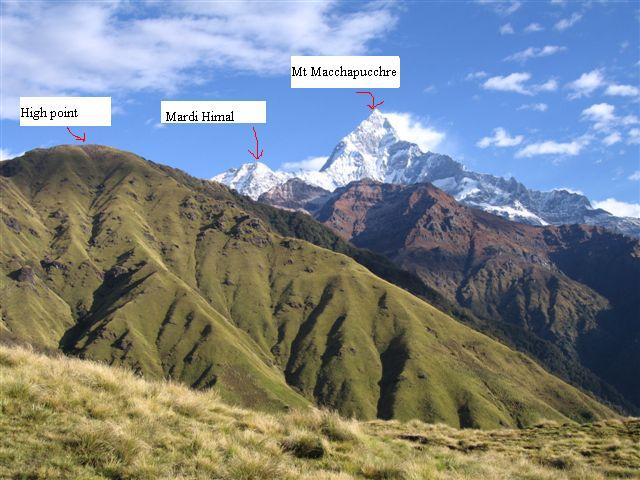
The next morning we set off again, up through the rododendron forest and onto the ridge. The forest was awesome, and so were the views. We meet several local farmers up here. I felt right at home surrounded by the sheep, and with the addition of a few spaniards I would have thought I was in kiwi land.

Just as we were coming up the last hill our guide seemed to run out of energy, and then we realised that he had had nearly no water all day. So we gave him some water (our 3 guides had only 2 litres of water all day as they didn't seem to think they would need water bottles on the trip). After putting up our tents we went to look for water but all the streams were dry, and but which stage we were very thirsty as we were camping at 3000m. Our guide kept claiming there was no problem and in the end as the night faded the local shepard came to our rescue carrying a 35 litre barrel of water, so we said a very big "ram ro cha" to him and gave hime some Dahl baht. That night we all listened to my kiwi tunes, and shared a little rum punch.

The next day we were supposed to camp at 4000m but after much probing we realised our guide really had no idea whether we would find water. Since they still had only a couple of litres of water we decided to play it safe and camp at 3700m. Again it took us all a long time to find water. By the time we had cooked dahl bhatfor lunch it was too late to move on so it was leisurely afternoon. The guides wanted to camp on the hill top, but I suggested that we camp about 20 meters down since it was a little windy. As it became dark thick white clouds ascended from the valley...

Around midnight there was an impressive electrical storm and I could feel the hairs on my body. Noone else could sleep but somehow I managed to doze until I woke to the unmistakable sound of lightning and thunder right above us. Everyone was excited particularly the guides, there was singing and much loud Nepalese. We started counting our lucky stars that we had decided not to camp on the ridge after all! And then it started to snow...

And it snowed. In the morning it was just begining to settle on the ground, and still it snowed and thundered even during the day. Every so often it became quiet and I would think the snow had stopped, only to find 10cm more snow of the top of the tent blocking out the noise. It snowed for over 24 hours without stopping. There was much fun cooking pancakes over the dodgy kerosene stove in the guides tent, and watching them play in the snow for the first time. But they had only 2 sleeping bags between the three of them and all there stuff was wet. We need to get out of the snow and down the mountain.., but who was the guide now and who was the client?

In the morning it was still snowing lightly but we decided to head off anyway. Karin and I were reasonably well equiped except I was in running shoes, but our guides didn't have very good clothes at all. After another great pancake breakfast we quickly packed up (well quick by Nepalese standards...). We made the guides all use plastic bags in their shoes, and tied our trousers for impromptu gaiters and each grabbed a stick. I slipped and slid like crazy in my running shoes, but luckily I had found a stick with a branch sticking out a little like an ice axe so I felt okay. About twenty minutes later our guide was walking along with his jacket undone but freezing, so I stoped and took of my gloves and did it up for him.

We gave the guides a quick lesson in self arrest and then headed down the steepest hill! Luckily for us, we weren't far above the snowline and after descending only 300 meters we were out of the worst of the snow. But that 300m was terrifying. It was steep, with wet snow over snow grass and on top of a 700m+ hill and I could get no traction in my shoes. Once, both feet slid out from under me and only the "pick" of my "axe" held me and my grip on the stick was getting worse and worse as I struggled to find my feet.

After we left the snow, things started to become better. Atleast now we didn't have any problems finding water any more. The sheep we had passed at 3000m on the way up were also heading down the mountain.

As we headed DOWN the mountain, Karin had the crazy idea that maybe we could get back to Pokarau the same day. So it was decided to take a short cut down to a previous days lunch spot. So we started walking UP and UP. The side ridge we thought we should walk down passed and still we were walking up. It was a great path right on the ridge so I didn't mind but Karin started to get a little upset that we weren't going the right way. (At the end of the day the guide kind of admitted that he had missed the track he meant to take).

After a while we did start heading down, straight down. It happens like this, you are following a little track in the forest and then suddenly the forest clears and you realise are basically on what is nearly a cliff, and you can see the paddy fields below, a long way below, and wonder how the hell you are going to get there. The paths themselves aren't especially scarey for a kiwi tramper, but I still find it amazing that somehow someone has found the track that weaves it's way down an incredibly steep hill with only a couple of very steep bits. I was loving the way down it was far more exciting and had better views than the way we had come up. However I stayed at the back to give the guides cookies and Raro when they started to tire.

Finally we came across a house at which point we stopped for a while and discovered forest + lots of rain + tiny tracks = LEECHES. Karin had many around her stomach and hated it. I, only had small leech farm in my shoes. However we couldn't stay where we were. Instead of heading back to town we decided to spend a last night in a local house, 45 minutes away, on some indefined track through prickly stuff or were our guides just a little lost again? And now we knew to look for the leeches climbing into our shoes.

When we got to where we were staying we were dripping wet, and picking 100s of leeches off our feet our hosts could only laugh. We stayed at an awesome place, where only three families lived with there own rice paddies on a small flat island. In the morning we found there was no easy way down or up from where they lived. Dispite the persistant rain everyone came out to see what the excitement was about when we arrived.

That night was wonderful. We were made a special fire in the house to warm us, and drunk some extremely good roxy (local alcohol and not the smoky stuff we had had earlier). It was so embarrasing for me because I couldn't get my feet to stop bleeding from all the leech bites I had! The guides especially were having a good time. We had a lot of laughs about the trip and it was so nice being inside while it rained outside.

The house was simple and beautiful, a mix of old an new. We slept on grass mats but had thick kerosene smelling polarfleece like blankets to keep us warm. They had toothbrushes and a well kept plates, but little else. Outside was a beautiful stone courtyard, and there were flowers in the garden. Really I cannot believe that these people are poor, they have eveything they need. About the only thing out of place was the alarm clock that every hour spoke the time in English. In the morning at 6am shortly after the real roster outside had woken, it woke everyone up with an electronic crowing noise including our lazy guides who had hoped to sleep in!

The last day we found an even steeper trail to take our tired legs down, and yes there were many more leeches. At moments like this you just need to embrace the leeches and laugh when the locals laughing at you and your bleeding feet as you pull 50 leeches from your shoes and socks! This is what the journey of life is about... We made it back to our guides village where we were local celebrites. After 3 days inside because of the constant rain everyone came round to hear our story, and the guides parents were very relieved that their children were okay. After that we wandered home again and I tried carrying the guides (now lightened) load the traditional way on my head, while he carried my heavy backpack.

So that is our story. We had hoped to climb the mountain (5500m) or atleast to make it to the snowline, but this time the snow came down and meet us. This was certainly one of those experiences which teaches you that life is a journey and not a destination!

Next Previous Home